.png)
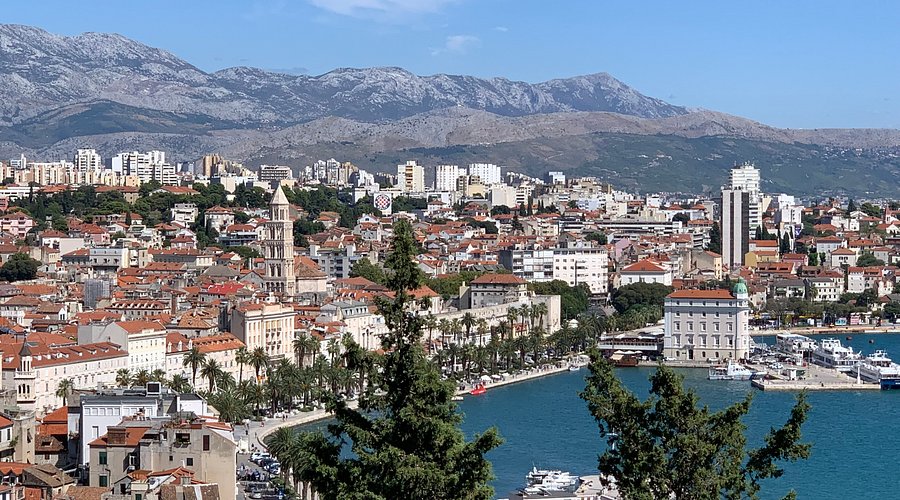
Croatia has two cities that dominate the conversation for international visitors: Split and Dubrovnik. Both are on the Dalmatian coast. Both are UNESCO World Heritage Sites. Both have extraordinary old towns built from white limestone, facing the Adriatic, packed with history.
And yet they are fundamentally different places — different in atmosphere, different in what they offer, different in who they suit. Choosing between them, or deciding how to divide your time, is one of the most common questions visitors to Croatia face.
This guide gives you an honest comparison. No tourism-board spin — just a clear-eyed look at what each city actually is, and which one is right for you.
Go to Split if: You want a real city with 1,700 years of living history, lower prices, better access to islands, and an atmosphere that hasn't been entirely consumed by tourism.
Go to Dubrovnik if: You want the most visually dramatic walled city in the Mediterranean, world-class restaurants, and you don't mind crowds and premium prices.
Go to both if: You have at least 7–10 days in Croatia and want to understand the full range of what Dalmatia offers.
Split's history is longer and stranger than Dubrovnik's. The city exists because a Roman emperor — Diocletian, born nearby — built his retirement palace here in 305 AD. When the regional capital of Salona was destroyed by Avar and Slavic invasions in the 610s, the surviving population moved into the palace and never left.
The result is unique in the world: a Roman imperial complex that became a medieval city that became a modern city, all layered on top of each other and all still in use. The walls of Diocletian's Palace are the walls of apartment buildings. The emperor's mausoleum is the cathedral. The Roman cellars are wine bars.
For a full account of this history, read our complete guide to the history of Diocletian's Palace.
Depth of history: Extraordinary. 1,700 years of continuous habitation in one place.
Dubrovnik's history is shorter but politically remarkable. Founded in the 7th century, it developed into the Republic of Ragusa — an independent city-state that survived for over 450 years (1358–1808) through a combination of diplomatic skill, strategic neutrality, and considerable wealth from maritime trade.
The Republic of Ragusa was, for its time, unusually progressive: it abolished the slave trade in 1416, maintained a sophisticated welfare system, and produced a remarkable literary and artistic culture. The old town you see today — the walls, the Rector's Palace, the Franciscan monastery — mostly dates from the 14th to 17th centuries, rebuilt after the catastrophic earthquake of 1667.
Depth of history: Significant, particularly for medieval maritime history. Less ancient than Split, but more politically fascinating.
Verdict: Split wins on historical depth and uniqueness. There is nothing else like Diocletian's Palace anywhere in the world. Dubrovnik's history is impressive but less singular.
Split is a real city. Around 160,000 people live here. The old town — Diocletian's Palace — contains around 3,000 residents going about their lives: doing laundry, walking dogs, arguing outside cafés, buying groceries at the Pazar market just outside the Silver Gate.
Tourism is significant but hasn't consumed the city. There are neighbourhoods, schools, supermarkets, football culture (Hajduk Split is one of Croatia's most passionate fan communities), and a local life that exists independently of visitors. In the evenings, the people in the Peristyle are a genuine mix of locals and tourists.
The atmosphere is Mediterranean in the best sense: unhurried, sociable, warm. Split is a city you can actually live in for a few days rather than just pass through.
Dubrovnik is one of the most beautiful cities in Europe. It is also, in peak season, one of the most crowded. The old town has a resident population of fewer than 1,500 people — down from around 6,000 in the 1990s, as residents have been progressively displaced by tourism-oriented accommodation and rising costs.
In July and August, the old town receives thousands of cruise ship passengers per day in addition to its hotel guests. The Stradun — the main street — can feel more like a moving queue than a promenade. The city has actively worked to manage this (cruise ship limits, visitor caps at peak times), but the fundamental pressure of a tiny, extraordinarily beautiful space attracting enormous visitor numbers hasn't been resolved.
In May, October, or November, Dubrovnik is genuinely magical. In August, it tests your patience.
Verdict: Split has a more authentic, liveable atmosphere year-round. Dubrovnik is more spectacular but more crowded, particularly in peak season.
Split is beautiful in a layered, complex way — the beauty of things that have been built, rebuilt, and built over for seventeen centuries. The Peristyle at sunrise, the Riva in evening light, the view from the cathedral bell tower across terracotta rooftops to the sea — these are genuinely memorable images.
But Split's greatest visual experience requires a layer that the eye alone can't provide: seeing the palace as it originally appeared. The Time Walk VR walking tour uses augmented reality headsets to overlay the original Roman palace onto what you're seeing right now — the throne room as a throne room, the temples intact, the Peristyle as Diocletian saw it in 305 AD. It's an 80-minute experience that transforms how you see the entire city. Find out more about how VR walking tours work.
Dubrovnik's visual impact is immediate and overwhelming. The old town walls — up to 25 metres high, stretching 1,940 metres around the entire city — are one of the most dramatic architectural achievements in Europe. Walking the walls (a 2km circuit with constant views of the terracotta rooftops and the Adriatic) is one of Croatia's essential experiences.
The Stradun is a perfectly preserved medieval street of remarkable visual coherence — the buildings on either side were largely rebuilt to the same design after the 1667 earthquake, creating an unusual homogeneity. At night, when the day-trippers have left and the marble pavement reflects the lantern light, it's one of the most beautiful streets in the world.
Verdict: Dubrovnik wins on immediate visual drama. Split's visual rewards are deeper but require more engagement to access.
This comparison isn't close.
Split is significantly more affordable than Dubrovnik across every category. Accommodation, restaurants, bars, activities — all cost less. A good dinner for two with wine in Split's old town runs €50–80. A coffee on the Riva costs €2–3. Mid-range accommodation in or near the old town runs €80–150 per night in peak season.
For a detailed look at how to spend a day in Split without overspending, see our Split in One Day itinerary.
Dubrovnik operates at a premium. The combination of limited accommodation supply, enormous demand, and a wealthy international visitor base has pushed prices to levels comparable with Western European capitals. A mid-range dinner for two can easily reach €100–150. Hotels within or near the old town in July–August regularly exceed €300 per night. Wall entry alone costs €35 per person.
Verdict: Split wins decisively on value. For the same budget, you get significantly more in Split.
Split is the hub of Dalmatian island ferry connections. From Split's ferry port, you can reach Hvar (fast catamaran, ~1 hour), Brač (car ferry, 50 minutes), Vis (fast catamaran, ~2.5 hours), Šolta (ferry, ~1 hour), and connections onward to Korčula and beyond. The frequency and variety of connections make Split the best base for island-hopping in the region.
For a full overview of day trip options, read our guide to things to do in Split which covers the best island excursions.
Dubrovnik has ferry connections to the Elaphiti Islands (Lopud, Šipan, Koločep) and to Korčula and Hvar, but fewer options and lower frequency than Split. The Elaphiti Islands are beautiful but small. For serious island exploration, Split is the better base.
Verdict: Split wins significantly on island access.
Split Airport (SPU) receives direct flights from most major European cities, with particularly good connections from the UK, Germany, Scandinavia, and the Netherlands. Ryanair, easyJet, British Airways, and numerous charter operators fly direct. The airport is 25km from the city; taxis and shuttles run regularly.
Split is also connected by overnight ferry to Ancona in Italy — a useful option if you're travelling overland through Europe.
Dubrovnik Airport (DBV) also receives extensive direct European connections, with strong UK, Irish, and German routes. It's similarly 20km from the old town. Prices tend to be slightly higher than Split due to greater demand.
Verdict: Roughly equal. Both have good connections; specific availability depends on your origin city.
Yes, and it's worth it if you have the time.
The two cities are connected by a 4–5 hour bus journey along the coast, or a short flight. Many visitors spend 2–3 days in Split, take a day trip to Hvar, and then continue to Dubrovnik for 2–3 days. This gives you a genuine feel for both cities without rushing either.
If you're short on time and can only choose one: Split gives you more for less, with greater historical depth and better island access. Dubrovnik is more famous internationally, but Split is the more rewarding destination for visitors who want to actually understand what they're looking at.
Dubrovnik is one of Europe's great visual spectacles. Split is one of Europe's great historical cities. They're not really in competition — they're different kinds of experience.
But if you're asking which one to prioritise, and you care about history, authenticity, value, and having room to breathe: Split.
And if you want to understand Split properly — to see Diocletian's Palace as it actually was, not just as the beautiful ruin it appears to be today — book the Time Walk VR walking tour. It's the experience that makes everything else in the city click into place.
Ready to experience Split the right way? Book your Time Walk VR tour.